How To Create Compelling Settings In Your Books.
I don’t like boring words.
I like scintillating words. Words that are skippy and delicious, or long with multiple syllables that roll like literary candy out of your mouth. Words that make you think, words that sound like what they are, words that dance and tease and have hidden meanings.
I do not like this word: Setting.
Setting.
So boring. Lifeless. No romance to it. No high jinks. No dynamite.
And yet.
As a writer, the setting is so important in a book. The setting can increase the tension and the conflict, transport the reader to paradise or to terror, and ratchet up the odds, the mystery, the romance or the thrill ride.
Here are a few thoughts on setting, from my fried writer brain to yours. I apologize for using my books as examples all the way through, but hey. I know my books best and I know why I used that setting as I did, so hopefully it will be helpful.
1. Use setting to heighten a difficult personal struggle and make life even more challenging for your character.
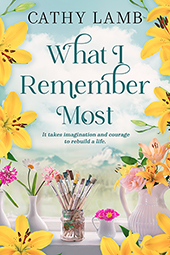
 In my latest book, What I Remember Most, the primary setting is a small, western style town in central Oregon surrounded by snow capped mountains. You can almost taste the snowflakes on your tongue and see sexy cowboys galloping by on horses.
But within that setting, my protagonist, Grenadine Scotch Wild, is living in her car. Yes, her car. On the run, away from a husband who has been arrested for embezzlement, fraud, and money laundering and will not tell the officials she’s innocent unless she returns to him. Grenadine’s accounts have been frozen by the government, she’s dead broke, therefore, car living.
Do you have a vision of car living? If not, go and park in your car in a parking lot and sit there for three hours. Stuffy. Hot. Uncomfortable. How do you sleep? Dangerous. Where do you pee? Yes, that. What a problem.
The setting worked because no one wants to live in a car and the readers were rooting for Grenadine to get out of it. She was a sympathetic character, a woman who had lost everything, a woman who was fighting to get out of car living, a woman who was working hard, had no help, and was on her own. And oh, a jail sentence hanging over her head.
Use setting to toss your character into chaos.
- Make your reader shudder. Your setting can be used for tension, horror, angst, crimes. Take them to a place they DON’T want to go. Ever. Make them uncomfortable. Make them catch their breath.
 I put Grenadine in jail for the weekend. I went to jail for three hours on a tour so I could get it right. Think: Suffocating. Bars. Scary people. Violence. Group showers. Horrible food and who looks good in a blue jumpsuit?
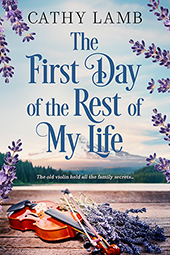
In The First Day Of The Rest Of My Life, I created a small, dusty, cramped house in the middle of nowhere for a crime to take place. The setting scared me, and I wrote it.
I had an insane asylum in Such A Pretty Face, briefly, where the mother was committed.
Settings can illuminate the plight of your characters, their internal hell and their external challenges.
- Make your reader gleeful. Let your reader live vicariously through your characters in their setting.
Later, after working as a bartender and as an assistant to a furniture maker, two exhausting jobs, Grenadine finally got enough money together to rent a place.
So what setting did I put her in next?
A cozy remodeled apartment above a red barn in the country.
I described the two decks overlooking the farmland, the magnificent sunset and sunrise views, the animals she sees, the peace and tranquility.
Why this setting?
I would love to live atop a barn, horses below, in the country. Many of my readers would, too.
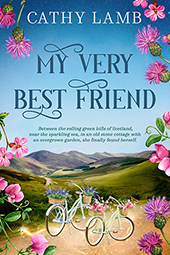
 In the book I just finished, My Very Best Friend, which almost made me want to go and live in a cabin, alone, in Montana, and mutter to myself, but that is another story, I set it in Scotland.
Imagine: Hot Scotsmen in kilts. Bagpipes. Green rolling hills. Charming villages.
Who wouldn’t want to go to Scotland?
I’ve also set stories on quaint islands, Oregon beach towns, a town along a river, a schoolhouse transformed into a home, Cape Cod, a lavender farm, a tree house, and a Queen Anne house.
Take your reader on a trip with you. They want to go. Their bags are packed and ready.
- Tap your readers’ inner most imaginations.
 In Julia’s Chocolates, Lara is a closet painter. I gave her an attic, then described all the wild, free wheeling paintings in there.
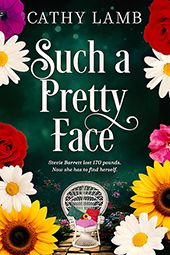
In Such A Pretty Face, Stevie had a garage where she built and painted chairs – huge chairs, with feet and wings and stripes and polka dots.
Grenadine is a collage artist and painter. I gave her a studio on the top floor of her little green house. I described the colorful tables and cheers, the jars full of paints, sequins, fabrics, brushes, lace, etc. The books on art, the plants, the windows. Being an artist appeals to readers, to their dreams.
Build settings that encourage your readers to think, to be inspired, to dream. What if…what if I started painting again? Building again? Writing? Making a collage? What if I changed my life? What if I became a new me?
- Relate to your readers’ real lives with your setting.
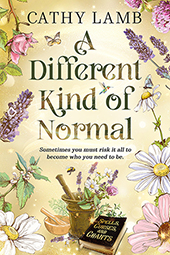
In A Different Kind Of Normal I created a home that belonged to my character’s ancestors. There was history in that house. Jaden was walking up the same stairs as her ancestors, looking out the same windows, crying at her kitchen table, which her ancestors had probably cried at, too.
Your readers have homes they love and miss, homes that have prickly memories. They have grandparents, crazy aunts, beloved dead fathers, too. They have Godzilla – type ex spouses and distracted boyfriends. They have funny pets. They have jobs and bosses they hate in the corporate world. They go to family reunions at the lake and take tranquilizers while they’re there.
They have failing businesses and cliques they have to deal with in the suburbs.
Link your readers’ personal lives to the setting in your story, which will make your book more relatable, and personal, to them.
6. Know your readers. What do many of them like? Use it.
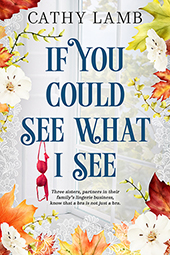
 I think my women readers like lingerie. It’s frilly. Pretty. It inspires passion. So in If You Could See What I See,Meggie had a lingerie company, filled with silk and lace.
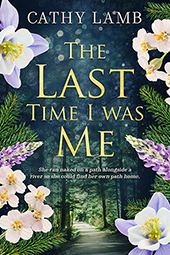
In The Last Time I Was Me, Jeanne Stewart gutted and remodeled a dilapidated house. I think my readers like reading about remodeling and décor, new kitchens and paint colors. They have homes, too.
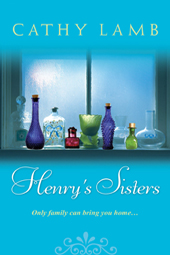
In Henry’s Sisters, the sisters were running a bakery. Giant cupcakes, wedding cakes, delicious treats. Yes, I think my readers like bakeries and sweets.
Appeal to your reader via your setting.
- Make your setting something that readers can laugh about.
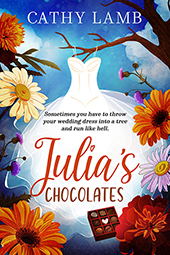
 In Julia’s Chocolates, Julia is out on her Aunt Lydia’s farm. Aunt Lydia has tons of chickens. Chickens in brightly painted chicken coops, chickens who chase each other, chickens who have quirky personalities. And the roosters, those dandy fellows!
Aunt Lydia also has a wooden rainbow bridge in her front yard, toilets overflowing with flowers, and four foot tall ceramic pigs who each have a nametag. The pigs are named after men Aunt Lydia doesn’t like.
Her front door is painted black to “ward off seedy men.”
Funny, right? Good. Readers like to laugh.
To sum up this huge essay, which I did not intend to be quite so long, write your settings to evoke memories, emotions, thoughts, tears, laughter, etc. from your readers. You want them to feel. You want them to think. You want them to block everything else out of their life and dive head first into your story.
Use the setting in your books to help them do so.
There is so much more to say about setting, how to use weather, charging rivers, frothing oceans, seasons, evocative or dangerous landscapes, bleak neighborhoods and destitute countries, etc. but that is enough for today. I have to start writing my new book now, if I can get my brain to work.
I do know the setting, though. It’s a tugboat on a river, complete with ducks who lay eggs in pots on the deck, a blue heron, geese, sailboats, and odd ball neighbors. Including a secretive man who lives two houseboats down…
About Cathy